If you’ve been following financial news lately, you might be wondering:
“Why are mortgage rates still so high if the Federal Reserve has already started cutting interest rates?”
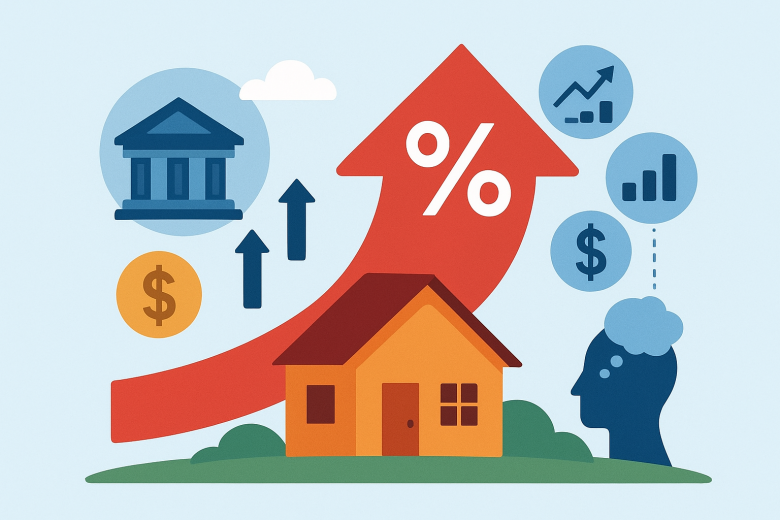
It’s a great question—and one that confuses even some seasoned investors. The truth is, mortgage rates don’t move in perfect lockstep with the Fed’s rate decisions. In fact, they’re influenced by four key factors that go beyond just the federal funds rate: interest rates, economic growth, investor sentiment, and inflation expectations.
Let’s break down what’s really going on—and what it means for you as a beginner investor or future homeowner.
1. The Fed’s Rate Isn’t the Same as Mortgage Rates
First, it’s important to understand what the Fed actually controls.
When the Federal Reserve cuts rates, it’s lowering the federal funds rate—the rate at which banks lend money to each other overnight. This impacts short-term borrowing costs like credit cards and car loans.
But mortgage rates are long-term, often tied to the yield on the 10-year U.S. Treasury bond. These rates move based on how investors expect the economy—and inflation—to perform over time.
So while the Fed can influence mortgage rates, it doesn’t directly set them.
2. Economic Growth Is Still Too Strong
Normally, rate cuts signal that the economy is slowing down. But right now, the U.S. economy remains surprisingly resilient.
- Unemployment is still low.
- Consumer spending remains high.
- Corporate profits haven’t fallen sharply.
When growth stays strong, lenders worry less about defaults and more about inflation staying elevated—which keeps long-term borrowing costs, like mortgage rates, higher.
Essentially, investors don’t believe the economy is cooling off enough to justify much lower rates yet.
3. Investor Sentiment Keeps Yields Elevated
Mortgage rates also respond to investor sentiment, or how optimistic (or pessimistic) investors feel about the market and the economy.
Recently, there’s been a tug-of-war in investor psychology:
- On one hand, rate cuts suggest the Fed wants to support the economy.
- On the other, strong job and spending data suggest inflation may not fall as quickly as hoped.
As a result, investors are demanding higher yields on bonds to offset this uncertainty. Higher bond yields translate directly into higher mortgage rates for borrowers.
4. Inflation Expectations Haven’t Fully Calmed Down
Even though inflation has come down from its 2022 highs, it’s still not where the Fed wants it—and people know it.
Inflation expectations matter because lenders don’t want to lose money in real terms over time. If investors expect prices to keep rising, they demand higher returns to make up for the loss in purchasing power.
That’s why mortgage rates tend to stay sticky until inflation expectations drop more convincingly.
So… When Will Mortgage Rates Fall?
In short: mortgage rates will likely fall once the market truly believes inflation is under control and economic growth cools enough to justify sustained lower yields.
That means:
- Slower job growth
- Weaker consumer spending
- Clearer signs that inflation is headed back toward 2%
Until then, mortgage rates may stay higher than many expected—even if the Fed keeps trimming short-term rates.
Key Takeaway for Beginner Investors
Understanding this disconnect is crucial if you’re planning to invest in real estate or simply watching the broader market.
Mortgage rates depend on how investors view the future, not just on what the Fed does today.
If you’re a beginner investor, this moment is a perfect example of how macroeconomics, market psychology, and inflation all work together to shape the financial landscape.
Stay patient, stay informed—and remember in investing, it’s not just about the headlines, but about what’s driving them.