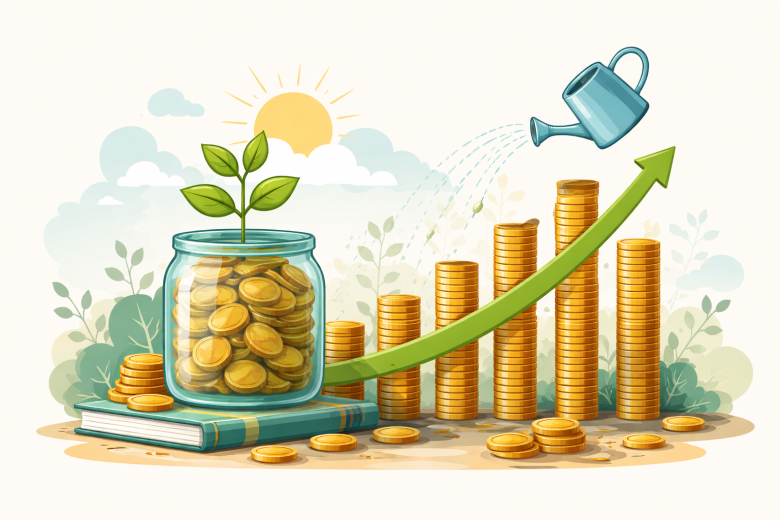
If you’re new to investing, there’s one concept you must understand before anything else: compound interest. It’s often called the secret weapon of long-term investors—and it’s why even small, consistent investments can grow into significant wealth over time.
In fact, compound interest is famously attributed to Albert Einstein as “the most powerful force in the universe.” Whether or not he actually said it, the idea behind it truly is powerful.
Let’s break it down in simple terms.
What Is Compound Interest?
Compound interest is when you earn interest not only on your original money, but also on the interest your money has already earned.
In other words:
👉 Your money makes money—and then that money makes even more money.
Simple Interest vs. Compound Interest
- Simple interest: You earn interest only on the original amount you invest.
- Compound interest: You earn interest on your original investment plus all previously earned interest.
Over time, that difference becomes massive.
A Simple Example of Compound Interest
Let’s say you invest $1,000 at a 7% annual return.
- After 1 year: $1,070
- After 5 years: ~$1,403
- After 10 years: ~$1,967
- After 30 years: ~$7,612
You didn’t add any extra money—yet your investment grew more than 7x.
That growth curve isn’t linear. It’s exponential. That’s the power of compounding.
Why Compound Interest Is So Powerful
1. Time Does Most of the Work
The longer your money is invested, the more dramatic compounding becomes. Early years may feel slow, but growth accelerates later.
This is why starting early matters more than investing large amounts.
2. You Don’t Need to Be a Market Expert
Compound interest rewards:
- Consistency
- Patience
- Long-term thinking
You don’t need to time the market or pick perfect stocks. Even broad index funds benefit enormously from compounding over time.
3. Small Contributions Add Up
Investing $100 per month at a 7% return over 30 years equals roughly $122,000—even though you only contributed $36,000.
That’s compound interest doing the heavy lifting.
Why Einstein (Supposedly) Loved Compound Interest
The quote often attributed to Einstein goes something like this:
“Compound interest is the eighth wonder of the world. He who understands it, earns it; he who doesn’t, pays it.”
Whether or not Einstein actually said it, the message is accurate:
- Investors benefit from compounding
- Borrowers (credit cards, high-interest loans) suffer from it
Compound interest works for you or against you—depending on how you use it.
Where You Can Earn Compound Interest
Compound interest appears in many places, including:
- Savings accounts
- Certificates of Deposit (CDs)
- 401(k)s and IRAs
- Index funds and mutual funds
- Dividend reinvestment plans (DRIPs)
The key factor isn’t the account—it’s reinvesting earnings and giving them time.
Common Beginner Mistakes With Compound Interest
🚫 Starting too late
🚫 Pulling money out too early
🚫 Chasing short-term gains
🚫 Letting fear interrupt long-term plans
The biggest enemy of compounding isn’t market crashes—it’s impatience.
How to Take Advantage of Compound Interest Today
Here’s how beginners can start using compound interest immediately:
- Start investing as early as possible
- Reinvest dividends and earnings
- Invest consistently (monthly if possible)
- Avoid unnecessary withdrawals
- Think in decades, not months
You don’t need to be rich—you need to be disciplined.
Final Thoughts: The Quiet Engine of Wealth
Compound interest isn’t flashy. It doesn’t promise overnight riches. But over time, it quietly builds wealth in a way few other strategies can.
For beginner investors, understanding compound interest is more important than picking stocks, reading charts, or predicting the market.
Start early. Stay consistent. Let time do the rest.