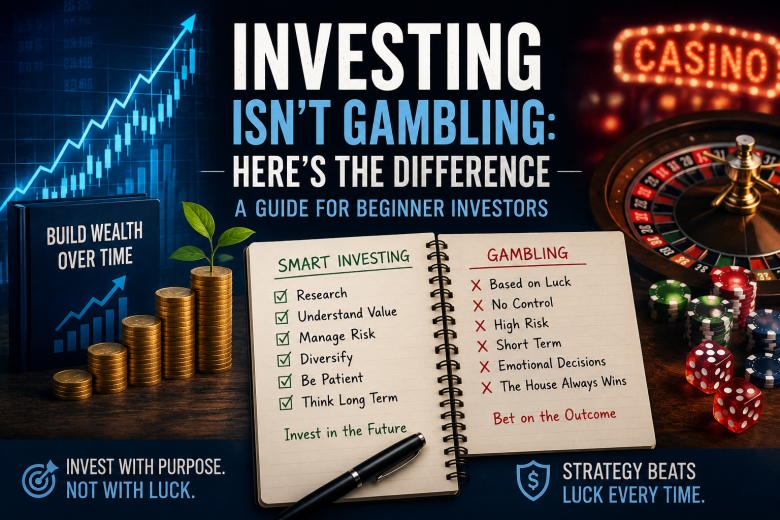
Many people avoid investing because they believe putting money into the stock market is just another form of gambling. After all, both involve risking money, both can result in gains or losses, and neither comes with a guaranteed outcome.
But while investing and gambling may look similar on the surface, they are fundamentally different.
The biggest difference is this:
Gambling is based primarily on chance. Investing is based on ownership, research, strategy, and long-term growth.
Understanding the difference between investing and gambling is one of the first steps toward becoming a confident investor.
What Is Investing?
Investing means putting your money into assets that have the potential to increase in value or generate income over time.
When you invest in a company by buying shares of stock, you are purchasing a small ownership stake in that business. Your investment can grow as the company becomes more profitable, expands, and creates value.
Common investments include:
- Stocks
- Exchange-traded funds (ETFs)
- Mutual funds
- Bonds
- Real estate
- Retirement accounts
Successful investing typically focuses on:
- Long-term growth
- Diversification
- Understanding risk
- Making informed decisions
- Staying consistent over time
Investing is not about predicting tomorrow’s stock price. It is about participating in the growth of businesses and economies over years and decades.
What Is Gambling?
Gambling involves risking money on an uncertain outcome where chance plays a major role.
Examples include:
- Casino games
- Lottery tickets
- Sports betting
- Slot machines
- Certain types of speculative wagers
In gambling, the odds are usually designed so that the house has an advantage. Over time, casinos and betting companies make money because the probability is tilted in their favor.
A gambler is generally betting on an outcome.
An investor is buying an asset.
That distinction matters.
Investing vs Gambling: The Key Differences
| Investing | Gambling |
|---|---|
| You own an asset | You place a wager |
| Based on research and analysis | Primarily based on chance |
| Can create long-term wealth | Usually short-term outcomes |
| Businesses can grow and create value | Money changes hands based on results |
| Diversification can reduce risk | Each bet is usually independent |
| Time can work in your favor | Time generally favors the house |
Why Investing Can Feel Like Gambling
If you have never invested before, watching stock prices move up and down can feel like a game of chance.
A stock rises one day and falls the next. Headlines predict market crashes. Social media is filled with people promoting the “next big stock.”
This short-term noise can make investing seem like gambling.
However, experienced investors focus on factors such as:
- Company earnings
- Revenue growth
- Market trends
- Economic conditions
- Valuation
- Long-term business performance
A disciplined investor is not asking:
“Will this stock go up tomorrow?”
They are asking:
“Does this investment have the potential to grow over the next 5, 10, or 20 years?”
Is Buying Individual Stocks Gambling?
It depends on how you approach it.
Buying a stock after researching a company’s financial health, competitive position, and future opportunities is investing.
Buying a stock because someone online said it will “explode tomorrow” is closer to speculation.
Speculation happens when someone takes a high-risk position hoping for a quick profit without fully understanding the underlying asset.
Examples include:
- Chasing trending stocks
- Investing based only on social media hype
- Putting all your money into one company
- Trying to quickly double your money
The more your decision relies on luck rather than analysis, the closer it becomes to gambling.
Why Diversification Makes Investing Different
One of the biggest differences between investing and gambling is diversification.
A gambler might put all their money on one outcome.
An investor can spread risk across many investments.
For example, instead of buying shares in only one company, an investor might buy an index fund that owns hundreds of companies across different industries.
If one company struggles, the impact on the overall portfolio is reduced.
Diversification does not eliminate risk, but it helps manage it.
Time Is an Investor’s Biggest Advantage
One of the most powerful differences between investing and gambling is time.
Investing rewards patience.
Historically, broad stock markets have increased in value over long periods despite experiencing temporary declines. Investors who continue contributing and remain disciplined often benefit from economic growth and compound returns.
Gambling typically relies on short-term outcomes.
Investing allows your money to potentially grow through:
- Market appreciation
- Dividend payments
- Reinvested earnings
- Compound growth
The earlier you start investing, the more time your money has to work for you.
Common Investing Mistakes That Make It Feel Like Gambling
Many beginner investors accidentally turn investing into gambling by making emotional decisions.
Common mistakes include:
Trying to Time the Market
Nobody can consistently predict the perfect time to buy or sell.
Many successful investors focus instead on investing regularly over time.
Time in the market beats timing the market. Read more in our Blog post here.
Following Investment Hype
A popular stock is not always a good investment.
Always understand what you are buying and why.
Taking Too Much Risk
Putting your entire portfolio into one stock or one investment type increases your chances of major losses.
Investing Money You Cannot Afford to Lose
Money needed for emergencies or short-term expenses generally should not be invested in risky assets.
Read how much money you should have saved before investing in our blog post here.
How Beginners Can Start Investing the Right Way
If you are new to investing, focus on building good habits:
- Create an emergency fund first.
- Pay off high-interest debt.
- Learn the basics of investing.
- Start with a small amount.
- Invest consistently.
- Choose diversified investments.
- Think long term.
You do not need thousands of dollars to become an investor. Many people start with small monthly contributions and gradually build wealth over time.
The Bottom Line: Investing Is Not Gambling
Investing and gambling both involve risk, but they are not the same.
Gambling is primarily about chance and short-term outcomes.
Investing is about ownership, strategy, patience, and allowing your money to grow over time.
The goal of investing is not to get lucky. The goal is to make informed decisions and give yourself the best possible opportunity to build long-term wealth.
If you are just getting started, remember: investing is not about having all the answers today. It is about learning, starting early, and making consistent progress.
Frequently Asked Questions
Is investing basically gambling?
No. While investing involves risk, it is different from gambling because investors own assets that can create value over time. Gambling relies primarily on chance and uncertain outcomes.
Are stocks considered gambling?
Stocks are not gambling when purchased as part of a thoughtful investment strategy. Buying stocks without research or chasing quick profits can become more like speculation.
Can you lose money investing?
Yes. Investments can lose value, especially in the short term. However, diversification and a long-term strategy can help manage risk.
What is safer: investing or gambling?
Investing in diversified assets over the long term has historically been a more reliable approach to building wealth than gambling, where the odds typically favor the house.