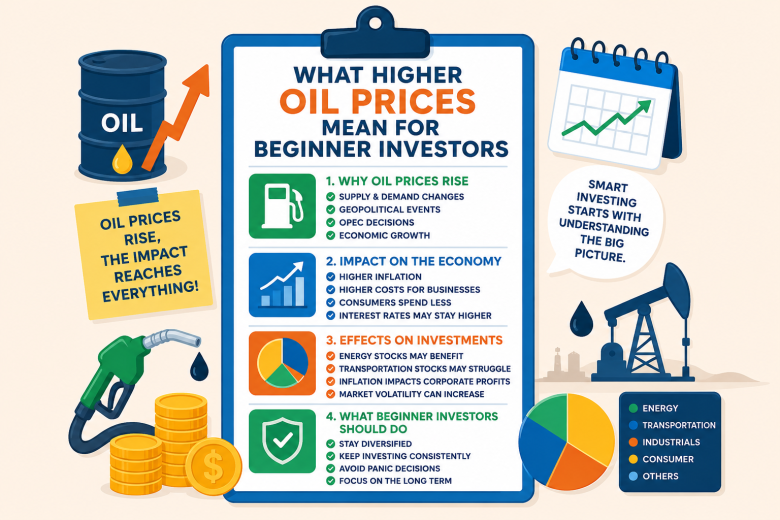
If you’ve been to the gas pump lately, you’ve probably noticed fuel prices creeping higher again. Rising oil prices affect far more than just your weekly fill-up — they can influence inflation, stock prices, interest rates, and even the performance of your investment portfolio.
For beginner investors, understanding how oil impacts the economy can help you make smarter long-term investing decisions without panicking every time energy prices spike.
In this guide, we’ll break down what higher oil prices actually mean, which sectors tend to benefit or struggle, and how beginners should think about investing during periods of rising energy costs.
Why Oil Prices Matter to Investors
Oil is one of the world’s most important commodities. It powers transportation, manufacturing, shipping, airlines, agriculture, and countless industries across the global economy.
When oil prices rise significantly:
- Businesses face higher operating costs
- Consumers spend more on fuel and transportation
- Inflation often increases
- Central banks may keep interest rates higher
- Corporate profits can shrink in some sectors
This creates ripple effects across the stock market and economy. Recent concerns about persistent inflation and rising commodity prices have kept energy markets in focus for investors.
For beginners, the key thing to understand is this:
Higher oil prices are not automatically “bad” for investing — they simply shift which industries perform well and which ones face pressure.
Why Oil Prices Rise
Oil prices move for many reasons, including:
- Geopolitical conflicts
- OPEC production cuts
- Supply chain disruptions
- Strong economic demand
- Natural disasters
- Reduced drilling or refining capacity
In recent years, energy markets have remained volatile due to global conflicts, production decisions, and inflation concerns.
When supply becomes tight while demand stays strong, prices rise.
How Higher Oil Prices Affect the Stock Market
1. Energy Stocks Often Benefit
When oil prices increase, many energy companies earn more revenue and profit.
This can help stocks in sectors like:
- Oil producers
- Energy infrastructure companies
- Pipeline operators
- Refiners
Large energy companies may outperform during periods of rising oil prices because their products become more valuable.
For beginner investors, this is one reason diversified ETFs and index funds matter — many broad-market funds already include exposure to energy companies automatically.
If you’re new to ETFs, check out Best ETFs for Beginners in 2026 for a beginner-friendly breakdown of simple long-term investing options.
2. Transportation and Consumer Companies May Struggle
Higher fuel costs hurt industries that rely heavily on transportation.
Examples include:
- Airlines
- Shipping companies
- Trucking businesses
- Delivery services
- Retailers with high shipping costs
Consumers also have less disposable income when gas prices rise, which can reduce spending elsewhere.
That may pressure consumer discretionary stocks like restaurants, entertainment companies, and retailers.
3. Inflation Can Stay Elevated
Oil prices are closely tied to inflation because energy costs affect nearly everything.
When oil prices climb:
- Shipping becomes more expensive
- Manufacturing costs rise
- Food prices can increase
- Utility bills often go up
Persistent inflation can lead the Federal Reserve to keep interest rates elevated longer. Higher rates can pressure growth stocks and borrowing-sensitive sectors.
This connects directly to monetary policy changes discussed in The Fed Just Cut Interest Rates — What It Means for Beginner Investors and What the Fed Ending Quantitative Tightening Means.
Should Beginner Investors Worry About Rising Oil Prices?
Not necessarily.
Market corrections and economic shifts are normal parts of long-term investing.
Historically, markets have experienced:
- Oil shocks
- Recessions
- Inflation spikes
- Interest-rate hikes
- Wars
- Financial crises
Yet long-term diversified investors have still built wealth over time.
The biggest mistake beginners often make is reacting emotionally to headlines instead of sticking to a consistent investment strategy.
That’s why dollar-cost averaging remains one of the smartest approaches for new investors.
Related reading:
- Always Be Buying: Why Dollar-Cost Averaging Beats Market Timing
- The Simple 3-Fund Portfolio Strategy Explained
What Beginner Investors Should Do During Higher Oil Prices
Stay Diversified
Diversification helps protect your portfolio when certain industries struggle.
A balanced portfolio may include:
- Broad stock market ETFs
- International exposure
- Bonds
- Some energy exposure indirectly through index funds
If you’re unfamiliar with bonds, read What Are Bonds? A Beginner’s Guide to Investing in Bonds.
Avoid Panic Selling
Oil price spikes often create scary headlines.
But selling investments during volatility can hurt long-term returns.
Many beginner investors lose money not because they chose bad investments — but because they panic during uncertain periods.
Remember:
Temporary volatility is normal.
Continue Investing Consistently
Consistent investing during both good and bad markets helps smooth out volatility over time.
Even small recurring investments can build significant wealth thanks to compounding.
If you’re just getting started, read:
- How Much Money Do You Really Need to Start Investing?
- Your Next Steps: How to Start Investing
- What Is Compound Interest and Why Einstein Called It Powerful
Could Higher Oil Prices Cause a Recession?
They can contribute to economic slowdowns.
When consumers spend more on essentials like gasoline and energy, they often reduce spending elsewhere. Businesses may also cut costs when operating expenses rise.
However, oil prices alone do not guarantee a recession.
Markets and economies are influenced by many factors at once, including:
- Employment
- Consumer spending
- Interest rates
- Corporate earnings
- Government policy
That’s why it’s important not to make investment decisions based on one headline or one economic indicator.
Learning how companies perform financially can also help you better understand market reactions during inflationary periods. A good next read is How to Read an Earnings Report for Beginners.
Final Thoughts
Higher oil prices can create short-term volatility and increase inflation pressures, but they are also a normal part of economic cycles.
For beginner investors, the most important things to remember are:
- Stay diversified
- Keep investing consistently
- Avoid emotional decisions
- Focus on long-term goals
- Understand that some sectors benefit while others struggle
You do not need to predict oil prices perfectly to become a successful investor.
The investors who typically succeed over decades are the ones who remain disciplined, continue learning, and stay invested through changing market conditions.