A Complete Beginner’s Guide to Building Wealth
If you’ve ever wondered whether it’s “too late” to start investing, the answer is simple: it’s not.
Whether you’re in your 20s trying to build your first portfolio, in your 30s balancing family and finances, or in your 40s catching up on retirement goals, investing is one of the most powerful tools for building long-term wealth.
The biggest mistake people make isn’t choosing the wrong stock — it’s waiting too long to start.
In this guide, you’ll learn:
- How to start investing at every age
- The best investment strategies for beginners
- Common investing mistakes to avoid
- How much money you really need to start
- The smartest investments for your 20s, 30s, and 40s
By the end, you’ll understand exactly how to begin investing confidently — even if you’re starting from scratch.
Why Investing Early Matters More Than Almost Anything Else
One of the most important concepts in investing is compound growth.
Money invested today has years — sometimes decades — to grow.
Even small monthly investments can turn into significant wealth over time.
Here’s what that means in practical terms:
- Investing $200/month starting at age 25 could grow dramatically more than starting at 40
- Time in the market matters more than timing the market
- Consistency beats trying to “get rich quick”
The earlier you start, the less money you often need to invest overall.
Step 1: Build a Financial Foundation Before Investing
Before buying stocks or ETFs, make sure you have these basics covered:
Create an Emergency Fund
You should generally save:
- 3–6 months of living expenses
- In a high-yield savings account
- Before aggressively investing
This prevents you from selling investments during emergencies.
Pay Off High-Interest Debt
Credit card debt charging 20% interest will usually cost you more than most investments earn.
Focus on:
- Credit cards
- Payday loans
- Extremely high-interest debt
Lower-interest debt like mortgages or student loans can often coexist with investing.
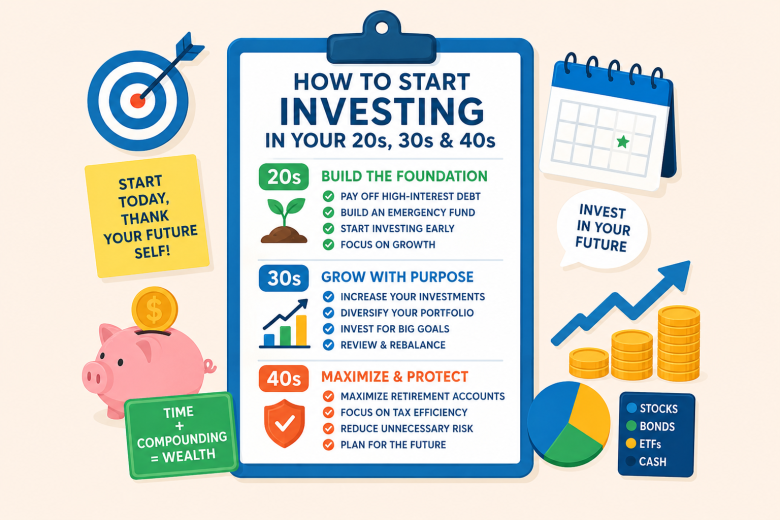
How to Start Investing in Your 20s
Your 20s are the best decade for investing because you have the most valuable asset possible: time.
Best Investing Strategy in Your 20s
Focus on:
- Long-term growth
- Aggressive investing
- Broad market index funds
- Building investing habits
Because retirement is far away, younger investors can usually tolerate more market volatility.
Best Investments for Your 20s
Popular beginner-friendly investments include:
- S&P 500 index funds
- Total market ETFs
- Roth IRA retirement accounts
- Employer 401(k) plans
Many successful investors simply invest consistently into diversified index funds for decades.
Example Portfolio for Beginners in Their 20s
A simple beginner portfolio might include:
- 80–90% stock index funds
- 10–20% bonds or cash
The goal at this age is growth.
How to Start Investing in Your 30s
Your 30s often come with:
- Higher income
- Family expenses
- Mortgage payments
- Career growth
This decade is about balancing wealth building with financial responsibilities.
Priorities for Investors in Their 30s
Focus on:
- Increasing retirement contributions
- Automating investments
- Diversifying your portfolio
- Avoiding lifestyle inflation
Many people earn significantly more in their 30s but invest very little because spending rises too quickly.
Smart Investing Moves in Your 30s
Consider:
- Maxing out employer 401(k) matches
- Opening a Roth IRA if eligible
- Investing monthly regardless of market conditions
- Increasing investments every time your income rises
One of the easiest wealth-building habits is automatically increasing your investment percentage annually.
How to Start Investing in Your 40s
Starting in your 40s is absolutely not too late.
In fact, many people reach their highest earning years during this decade.
The Biggest Goal in Your 40s
Your focus should shift toward:
- Accelerating retirement savings
- Reducing unnecessary risk
- Catch-up investing
- Preserving long-term wealth
Best Investments in Your 40s
Most investors still need growth, but with somewhat more stability.
A balanced portfolio may include:
- Index funds
- Dividend ETFs
- Bonds
- Retirement accounts
- Tax-advantaged investments
If You’re Behind on Retirement Savings
Don’t panic.
The biggest improvements usually come from:
- Increasing savings rate
- Delaying retirement slightly
- Reducing debt
- Investing consistently
Many investors sabotage themselves emotionally by believing they’ve “missed their chance.”
You haven’t.
Starting now is still dramatically better than waiting another five years.
Best Investment Accounts for Beginners
401(k)
A retirement account offered through employers.
Benefits include:
- Tax advantages
- Employer matching
- Automatic investing
If your employer offers matching contributions, prioritize getting the full match whenever possible.
Roth IRA
A Roth IRA allows investments to grow tax-free in retirement.
This is especially attractive for younger investors who expect higher income later in life.
Brokerage Account
A taxable investment account offering flexibility for:
- Long-term investing
- ETFs
- Stocks
- Dividend investing
Brokerage accounts have no retirement withdrawal restrictions.
What Should Beginners Actually Invest In?
Most beginner investors do not need complicated strategies.
In many cases, a diversified ETF or index fund portfolio is enough.
Why Index Funds Are Popular
Index funds offer:
- Diversification
- Low fees
- Simplicity
- Strong historical performance
One of the most common beginner strategies is investing consistently into funds tracking the S&P 500.
Common Investing Mistakes to Avoid
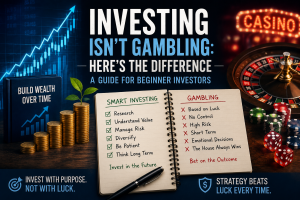
Trying to Get Rich Quickly
Speculative trading, meme stocks, and emotional investing destroy many beginner portfolios.
Long-term investing usually wins.
Waiting for the “Perfect Time”
Many people endlessly wait for:
- A market crash
- More income
- Better timing
Meanwhile, years pass without investing.
Investing Without a Plan
Every investor should know:
- Their goals
- Risk tolerance
- Time horizon
- Monthly contribution amount
How Much Money Do You Need to Start Investing?
Much less than most people think.
Many brokerages now allow:
- Fractional shares
- Zero-commission trades
- No account minimums
You can start investing with:
- $10
- $50
- $100 monthly
Consistency matters far more than starting with a huge amount.
The Power of Consistency
Successful investing is often boring.
The people who build long-term wealth usually:
- Invest consistently
- Ignore market panic
- Stay diversified
- Think long term
Building wealth is less about brilliance and more about discipline.
Final Thoughts: The Best Time to Start Investing Is Today
No matter your age:
- Your 20s give you maximum time
- Your 30s provide income growth opportunities
- Your 40s still allow substantial wealth building
The key is starting.
You do not need to:
- Be rich
- Understand every stock
- Predict the market
- Become a financial expert
You simply need:
- A plan
- Consistency
- Patience
The sooner you begin investing, the more opportunity your money has to grow over time.
And years from now, your future self will likely be grateful you started today.