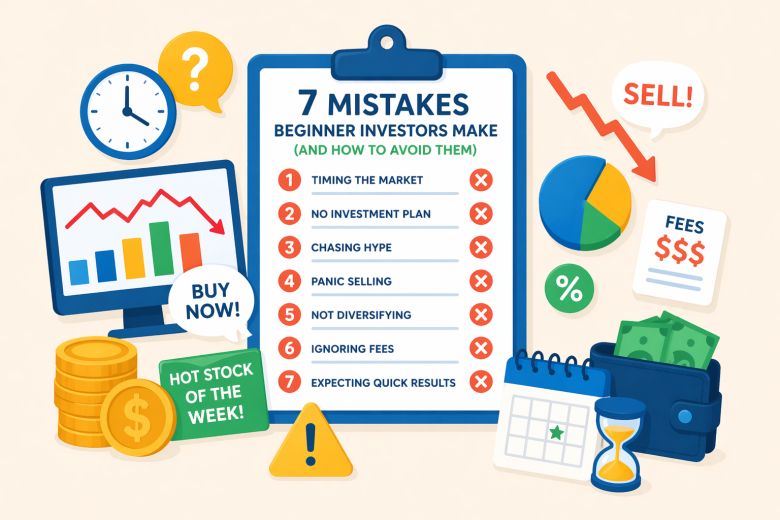
Starting your investing journey is exciting but it’s also where many people make costly mistakes. The good news? Most beginner investing mistakes are predictable and avoidable.
This guide breaks down the most common pitfalls new investors face, along with simple, actionable ways to avoid them so you can build wealth with confidence.
1. Trying to Time the Market
The mistake:
Waiting for the “perfect” moment to buy or sell.
Many beginners believe they can outsmart the market by buying low and selling high. In reality, even professionals struggle to consistently time the market.
Why it hurts you:
You miss out on long-term gains while sitting on the sidelines.
What to do instead:
Focus on time in the market, not timing the market. Use strategies like:
- Dollar-cost averaging (investing consistently over time)
- Long-term holding
2. Investing Without a Plan
The mistake:
Jumping into investing without clear goals.
Buying random stocks or funds without understanding why leads to inconsistent results.
Why it hurts you:
You end up reacting emotionally instead of following a strategy.
What to do instead:
Define:
- Your goal (retirement, passive income, short-term growth)
- Your time horizon
- Your risk tolerance
Then build your portfolio around those factors. Check out our 3 fund portfolio blog.
3. Chasing Hype and Trends
The mistake:
Buying “hot” stocks because everyone is talking about them.
Social media and headlines can make certain investments seem like guaranteed wins.
Why it hurts you:
By the time you hear about it, the price is often already inflated.
What to do instead:
- Do your own research
- Focus on fundamentals, not hype
- Ask: Would I buy this if no one was talking about it?
4. Panic Selling During Market Drops
The mistake:
Selling investments when the market dips.
Market volatility is normal, but beginners often react emotionally to short-term losses.
Why it hurts you:
You lock in losses and miss the recovery.
What to do instead:
- Accept that downturns are part of investing
- Stick to your long-term plan
- Avoid checking your portfolio too frequently
5. Not Diversifying
The mistake:
Putting all your money into one stock or sector.
It’s tempting to go “all in” on something you believe in.
Why it hurts you:
If that investment fails, your entire portfolio takes a hit.
What to do instead:
Spread your investments across:
- Different industries
- Asset types (stocks, ETFs, bonds)
- Geographic regions (if possible)
Diversification reduces risk without sacrificing growth.
6. Ignoring Fees and Expenses
The mistake:
Overlooking fees from funds, apps, or advisors.
Fees might seem small but they compound over time.
Why it hurts you:
Even a 1% fee can significantly reduce long-term returns.
What to do instead:
- Choose low-cost index funds or ETFs
- Compare expense ratios
- Avoid unnecessary trading fees
7. Expecting Quick Results
The mistake:
Thinking investing is a fast way to get rich.
Many beginners expect rapid gains and get discouraged when it doesn’t happen.
Why it hurts you:
You may abandon a solid strategy too early.
What to do instead:
Shift your mindset:
- Investing is a long-term game
- Wealth builds gradually through consistency
- Compounding takes time but it’s powerful
Quick Summary: What Not to Do When Investing
If you remember nothing else, avoid these:
- Don’t try to time the market
- Don’t invest without a plan
- Don’t chase hype
- Don’t panic sell
- Don’t put all your eggs in one basket
- Don’t ignore fees
- Don’t expect overnight success
Every investor makes mistakes but the most successful ones learn from them early.
By avoiding these common beginner investing mistakes, you put yourself ahead of most people and set a strong foundation for long-term financial growth.
If you stay consistent, think long-term, and keep emotions in check, investing becomes much less about luck and much more about discipline.