
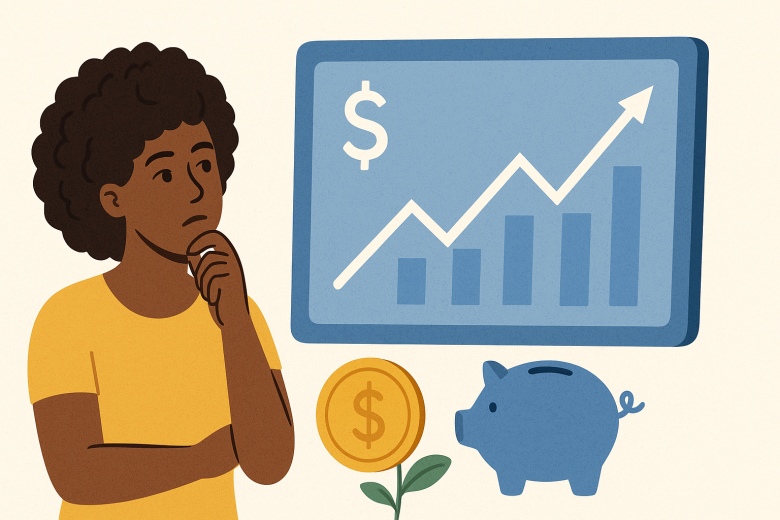
If you’re new to investing, one of the first questions you might ask is: “How much money do I need to start investing?”
The good news? You don’t need to be wealthy to begin. In fact, thanks to new tools, apps, and investment options, you can start with as little as $5–$100. The key is to understand your goals, your budget, and which investment vehicles make the most sense for you.
In this guide, we’ll break down:
- Why you don’t need a lot of money to get started
- The minimum amounts required for common investment types
- Tips to begin investing with a small budget
Why You Don’t Need Thousands to Start Investing
In the past, investing was often seen as something only the wealthy could do. Traditional brokers sometimes required minimum balances of $1,000–$5,000 just to open an account.
Today, the landscape has completely changed:
- Fractional shares allow you to buy part of a stock for as little as $1.
- Robo-advisors and apps let you start investing automatically with small deposits.
- Retirement accounts such as IRAs often have low or no minimum requirements.
The bottom line: it’s more important to start than to wait until you have “enough.” Even small investments grow over time thanks to compound interest.
How Much Money You Need to Start With Different Investments
Here’s a breakdown of common investment types and how much you realistically need to get started:
1. Stocks
- Minimum needed: $1–$100
- Thanks to fractional shares, you don’t need hundreds of dollars to buy big-name companies like Amazon or Tesla.
- Example: Invest $10 into Apple stock through platforms like Robinhood, Fidelity, or Charles Schwab.
2. Exchange-Traded Funds (ETFs)
- Minimum needed: $1–$50
- ETFs are baskets of stocks you can invest in. Many apps now allow fractional ETF purchases.
- Example: You could put $25 into a total stock market ETF and own a piece of 3,000+ companies.
3. Mutual Funds
- Minimum needed: $500–$3,000 (but some have $0 minimums through brokers).
- Mutual funds often have higher requirements, but many brokerages are lowering these barriers.
4. Retirement Accounts (IRA or 401k)
- Minimum needed: Often $0 to open, but contributions start around $50–$100.
- If your employer offers a 401(k) with a match, it’s one of the easiest ways to begin investing.
5. Real Estate Investing
- Minimum needed: $100+ through real estate crowdfunding platforms.
- You don’t need tens of thousands anymore—companies like Fundrise let you start small.
Tips for Investing With a Small Budget
- Automate contributions – Set up automatic deposits, even if it’s just $25 per month.
- Focus on consistency, not amount – Investing $50 monthly beats waiting years to save $5,000.
- Use apps that allow fractional shares – This ensures you’re not locked out of big-name companies.
- Prioritize an emergency fund first – Have at least 3–12 months of expenses saved before heavily investing. This ensures you and your family have money for emergencies, so you don’t dip into your investments (sometimes incurring penalties to do so).
- Take advantage of free employer money – Always contribute enough to get your full 401(k) match if available.
Final Thoughts
So, how much money do you really need to start investing? As little as $1.
What matters most is starting early, contributing consistently, and letting compound growth work in your favor. Whether you have $50, $500, or $5,000, the best time to begin is today.





Thank you !
The information you shared was helpful and I will be putting it to use .
I appreciate that you are wanting to share what you have learned with others . 😃
Thanks! Glad you enjoyed