Investing for passive income is one of the smartest strategies in 2025, especially for those seeking financial freedom or stable cash flow in retirement. With inflation concerns and market volatility, Exchange-Traded Funds (ETFs) have become a go-to solution for building a diversified, income-generating portfolio.
In this post, we’ll cover the top 3 ETFs for passive income in 2025, highlighting their yields, performance, and why they stand out this year.
What Makes a Great Passive Income ETF?
Before we jump in, let’s define what makes an ETF ideal for passive income:
- High and reliable dividend yield
- Strong track record of dividend growth or stability
- Low expense ratio
- Diversified holdings across sectors
- Monthly or quarterly distributions
Now, let’s get into the top picks for this year.
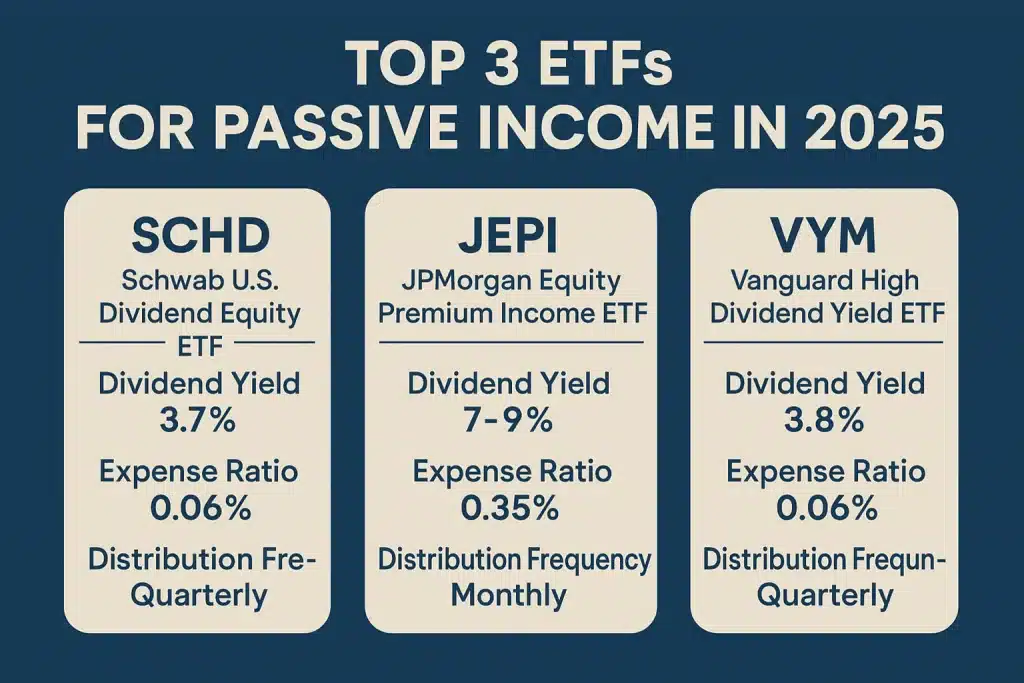
1. SCHD – Schwab U.S. Dividend Equity ETF
Dividend Yield (2025): ~3.7–4.0%
Expense Ratio: 0.06%
Distribution Frequency: Quarterly
Why It’s a Top Pick:
SCHD continues to dominate the dividend ETF space in 2025. It focuses on high-quality U.S. companies with consistent dividend payouts and strong fundamentals. Its screening process favors companies with long-term profitability and solid return on equity.
Top Holdings Include:
- PepsiCo
- Broadcom
- Coca-Cola
2. JEPI – JPMorgan Equity Premium Income ETF
Dividend Yield (2025): ~7-9%
Expense Ratio: 0.35%
Distribution Frequency: Monthly
Why It’s a Top Pick:
JEPI is perfect for investors seeking higher monthly income with a bit of a twist. It combines high-quality S&P 500 stocks with an options overlay strategy (covered calls), making it less volatile while boosting income.
Key Benefits:
- Monthly income
- Less sensitive to market downturns
- Diversified exposure to blue-chip stocks
Top Sectors: Information Technology, Health Care, Financials
3. VYM – Vanguard High Dividend Yield ETF
Dividend Yield (2025): ~3.2%
Expense Ratio: 0.06%
Distribution Frequency: Quarterly
Why It’s a Top Pick:
VYM is a classic choice for long-term passive income investors. It tracks the performance of U.S. companies with above-average dividend yields and offers wide sector diversification.
Top Holdings:
- Johnson & Johnson
- ExxonMobil
- JPMorgan Chase
Who It’s For:
Investors who want broad exposure to income-producing stocks with minimal fees and long-term growth potential.
Final Thoughts
Choosing the right ETFs for passive income in 2025 means balancing yield, risk, and long-term stability. Whether you prefer monthly paychecks with JEPI, consistent growth with SCHD, or broad market exposure through VYM, each offers unique benefits for the income-seeking investor.
Quick Comparison Table
| ETF | Yield (2025) | Fee | Payout | Best For |
|---|---|---|---|---|
| SCHD | ~3.7–4.0% | 0.06% | Quarterly | Dividend growth |
| JEPI | ~7–9% | 0.35% | Monthly | High income |
| VYM | ~3.2% | 0.06% | Quarterly | Broad exposure |
Frequently Asked Questions (FAQs)
Q: Are ETFs good for passive income?
A: Yes. ETFs offer diversification, low fees, and steady dividend payouts—ideal for building passive income.
Q: Can I live off ETF dividends in retirement?
A: With the right allocation and yield-focused ETFs like JEPI or SCHD, many retirees build portfolios that generate reliable monthly or quarterly income.
Q: Do dividend ETFs reinvest automatically?
A: Most brokerages allow you to opt into dividend reinvestment plans (DRIPs) for ETFs.
Related Posts:
- Skip the latte and Invest
- Stock Dividend Investing: What It Is and How to Make It Work for You
- ETF vs Index Fund vs Mutual Fund: What’s the Difference and Which Should You Choose?
Conclusion
The top ETFs for passive income in 2025 offer something for every investor. Whether you’re building long-term wealth or seeking stable income streams, SCHD, JEPI, and VYM deserve a spot on your radar.
If you’re ready to put your money to work without the day-to-day hassle, these ETFs are a solid place to start.